⚡ QUICK ANSWER
Albemarle Moving donates first on every job. 30+ families helped in 2025. 65%+ diverted from landfill.
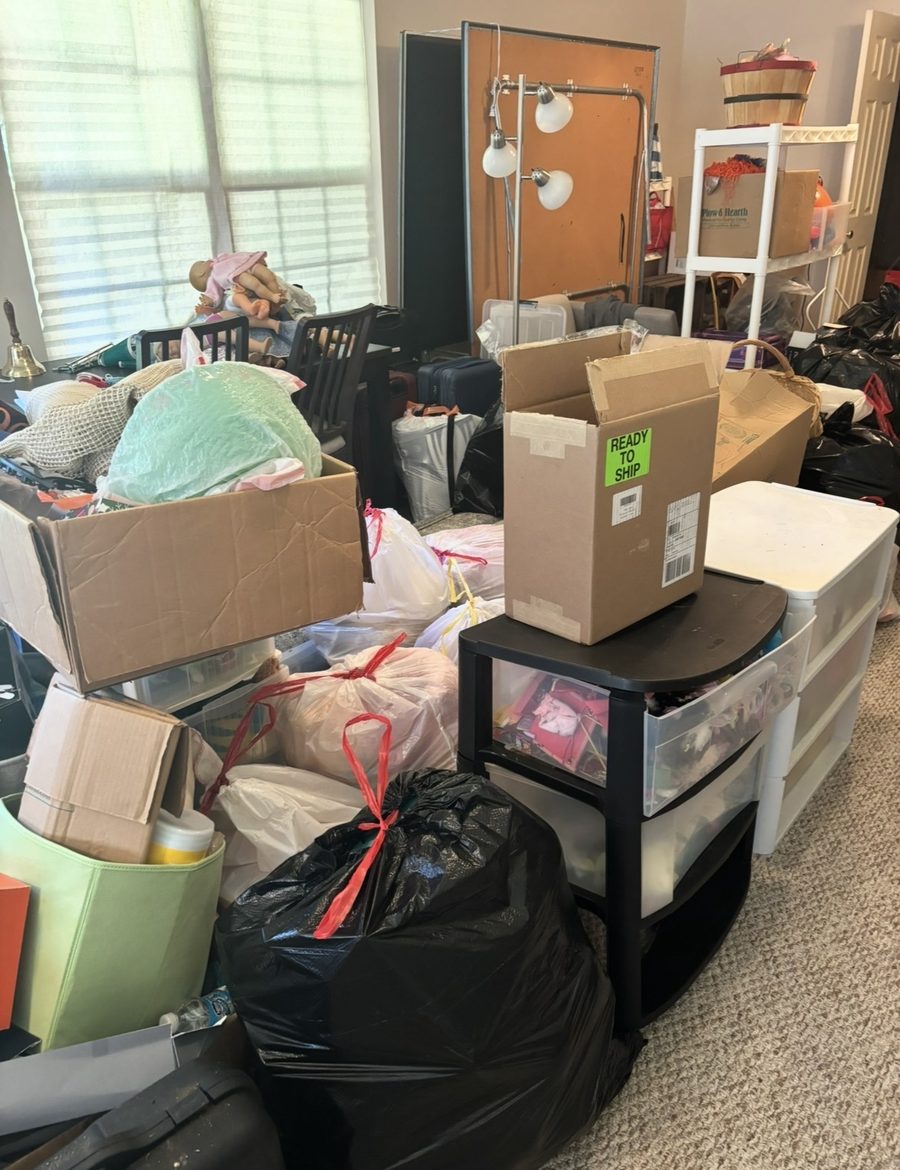
Look at that photo. That’s a real room in a real home we cleaned out in the Charlottesville area. Bags everywhere. Boxes stacked to the ceiling. Furniture you can barely navigate around. Clothing piled on every surface. A situation that took years to develop and felt impossible to ever undo.
The family who called us wasn’t embarrassed to call. They were exhausted. And when we walked in, we didn’t judge, we didn’t photograph it for shock value, and we didn’t treat everything in that room as garbage. We treated it as what it was: someone’s life. Someone’s accumulation. And buried in that accumulation, things that still had value for other people.
What “Donate First” Actually Looks Like in Practice
When we walk into a job like the one in that photo, the first question our crew asks isn’t "where’s the dumpster?" It’s "what can still serve someone?" Clothing in reasonable condition gets bagged for donation. Small furniture items that are structurally sound get set aside. Books, kitchenware, household goods — we look at every category before it goes in the disposal pile.
In 2025, this approach resulted in us connecting over 30 families across Charlottesville and Albemarle County with donated goods from jobs exactly like the one in that photo. We’ve donated to Goodwill Charlottesville, Habitat for Humanity ReStore on Route 250, the SPCA Rummage Sale, and directly to families through community connections.
Why This Matters — For Both Sides of the Political Spectrum
We work in Charlottesville — a city with one of the most progressive populations in Virginia — and we work in rural Albemarle, Nelson, Augusta, and Rockingham Counties, where the values look very different on the surface. Here’s what we’ve found: nobody wants to waste. It cuts across every background and belief.
The liberal homeowner in Belmont appreciates that their old refrigerator goes to a family who needs it rather than a landfill. The farmer in Nelson County who just cleared out his dad’s old workshop appreciates that usable tools go to someone who’ll actually use them. The values are different on paper, but the instinct — don’t waste what still has value — is universal.
The Numbers — 2025 Recap
What We Don’t Do
We don’t take photos of people’s homes without permission. We don’t share before-photos on social media to make people feel embarrassed. We don’t upsell or take advantage of difficult situations. And we don’t treat hoarding, estate cleanouts, or any other difficult life transition as an opportunity to extract maximum dollars from someone at their most vulnerable moment.
Our pricing is published. Our process is transparent. And our donate-first commitment is genuine — not a marketing tagline. If you’re dealing with a situation that feels overwhelming, call us. We’ve seen everything. And we handle it all with the same straightforwardness and respect.
How to Book
Call 434-230-4551 anytime — we answer 24/7. No deposit required. We come out, confirm the price before touching anything, sort for donation as we load, and collect payment after the job is done. Simple, honest, and genuinely focused on doing right by you and the community.